Hand Drawn Kids Activity Clipart for Graphics & Crafts
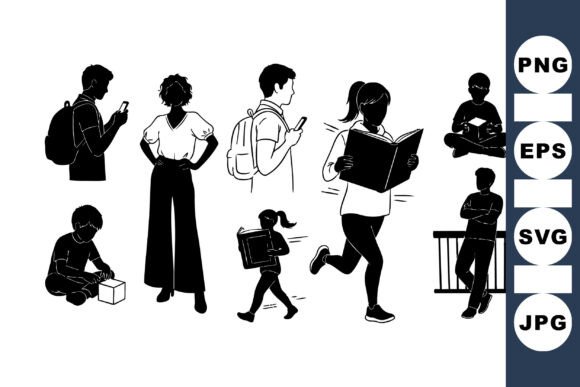
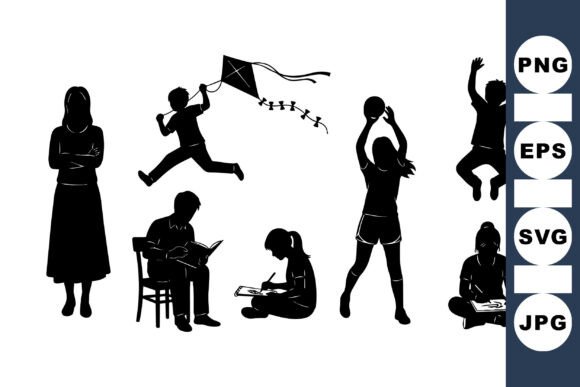
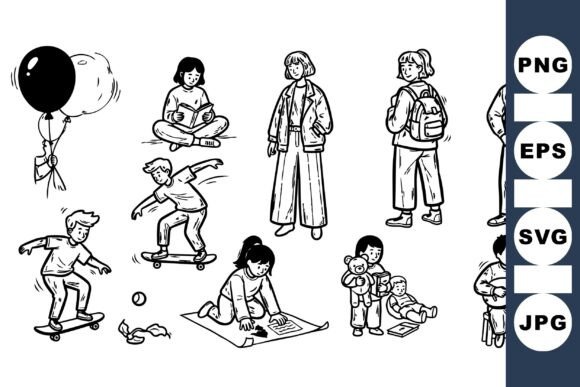
When I first opened the download for Hand Drawn Kids Activity Clipart, I immediately saw a collection that could settle into a very specific corner of the creative marketplace. The line art style feels intentionally unpolished in a way that reads as charming rather than sloppy. Characters are shown reading, skateboarding, holding balloons, and strumming a guitar. The scenes capture those everyday moments of leisure that don’t need to shout. For a digital product creator, this means the asset leans toward a playful, informal, and slightly nostalgic niche. It’s not corporate, not glittery, and not aggressively seasonal. That matters when you’re trying to build a cohesive brand around a visual mood.
The audience I picture for this would be buyers looking for a handmade, sketched feel—people shopping for nursery decor, children’s activity sheets, classroom printables, or casual scrapbook elements. The characters have a gentle whimsy that could attract parents, educators, and crafters who want something less rigid than standard vector clipart. From a seller’s perspective, this narrows the target down helpfully. You’re not competing with every generic kids’ graphic; you’re serving someone who prefers the imperfect line of a pencil over a polished digital stamp.
Testing the Asset in a Real Online Shop Scenario
I’m currently building a small collection of printable party invitations and activity placemats for an Etsy shop. Before committing to a full listing, I always run a new graphic asset through a series of low-risk tests. With Hand Drawn Kids Activity Clipart, I started by dragging a few of the balloon and skateboard characters into a blank Canva template. The goal was to see if they could hold their own in a simple layout without needing extra frames or heavy background textures. They did. The line art has enough presence to sit on a white background without feeling empty, and the uniformity of the drawing style means you can mix characters from the set without creating visual chaos.
Next, I mocked up a Pinterest pin and a product listing thumbnail. At thumbnail size, the sketched lines remain clear, and the characters’ activities—reading, playing guitar—are recognizable even at a glance. This is critical for marketplace click-through rates. A clipart set that turns into a blurry blob at 200 pixels wide will cost you sales. These passed the test. I also dropped the PNG files onto a dark background to check for subtle white halos around the edges. The transparency was clean, which is essential if you plan to layer these over colored shapes or patterned digital papers.
Practical Product Applications for Sellers
I see this set working across a range of physical and digital products. Here’s how I’d apply it if I were grooming a new collection for multiple platforms:
- Printable wall art: The simple line art pairs well with soft watercolor washes or typed quotes. I’d create a trio of nursery prints featuring the reading and balloon characters.
- Planner stickers: The casual scale of the illustrations makes them ideal for sticker sheets. I’d test these on matte sticker paper and include them in a kids’ routine planner kit.
- Invitation templates: For birthday parties or library-themed events, the reading and guitar characters could anchor a Canva template. I’d combine them with a playful script font.
- Sublimation designs: On a white mug or a children’s t-shirt, the black line art would translate cleanly without color shift issues. The skateboarding character, in particular, has a unisex appeal that works for apparel.
- Scrapbooking kits: As part of a larger digital paper pack, these clipart elements could be sold as embellishments. I’d bundle them with textured cardstock backgrounds and some handwritten-style word strips.
- Social media graphics: Bloggers or small business owners in the education space might use these to add a human touch to promotional posts or classroom newsletters.
What I appreciate most is that the set doesn’t try to be everything. It occupies a clear lane—leisure, childhood, casual moments—and that makes it easier to build a coherent product line around it. When I’m curating a shop, I look for assets that reinforce a signature style rather than diluting it. This clipart can do that.
How the Clipart Elevates Product Presentation
In a crowded creative marketplace, your listing images do the heavy lifting. A flat, unadorned product photo rarely wins the click. With Hand Drawn Kids Activity Clipart, I found that using the characters as decorative accents in mockup previews added a layer of storytelling. For example, when I featured the reading character on a mockup of a book-themed tote bag, the scene felt intentional and inviting. The same design on a plain white background looked sterile. This is a small but powerful shift: the clipart doesn’t just live on the product; it helps sell the product when used in the preview itself.
I also experimented with creating a themed bundle. By grouping the skateboarding, guitar, and balloon characters together, I could craft a “Weekend Adventures” collection that felt cohesive. Buyers often perceive bundles as higher value, and the consistent line art style supports that perception. When every element in a listing looks like it belongs together, the perceived professionalism of your shop jumps. This can justify a slightly higher price point and reduce the “this looks thrown together” hesitation that leads to abandoned carts.
Where It Works Best and Where Caution Is Needed
Over the years, I’ve learned that even the most charming graphic design asset has limits. Pushing a clipart set into the wrong product category leads to wasted time and poor reviews. Here’s my honest breakdown after testing:
Strongest applications:
- Large product previews and decorative layouts where the line detail can be appreciated.
- Themed printable bundles for parties, classrooms, or nurseries.
- Merchandise with generous print areas, like tote bags, children’s aprons, or notebook covers.
- Digital downloads where customers can resize the artwork themselves.
- Social media promos and blog graphics that need a quick, friendly visual lift.
Use with care:
- Tiny sticker details below 1 inch: the fine lines may lose definition on low-resolution prints.
- Overly complex layouts with multiple overlapping characters: the line art can become visually muddy when too many elements compete.
- Dark or highly saturated backgrounds: the thin black strokes might wash out or lose contrast, especially on apparel prints.
- Products requiring precise Cricut or Silhouette cutting lines: the hand-drawn style often has irregular edges that aren’t ideal for clean-cut vinyl decals. If you’re selling SVG files, test the cut path carefully and consider offering a simplified version.
- Text-heavy templates where the illustration needs to be subordinate: the characters have enough personality that they can distract from a headline if not scaled down properly.
Seller Notes from the Testing Bench
Before I finalize any product listing, I run through a checklist that saves me from returns and customer complaints. For Hand Drawn Kids Activity Clipart, here’s what I’d prioritize:
- Mockup testing: Drop the PNGs onto real product mockups—t-shirts, mugs, tote bags, and greeting cards. Check how the line weight holds up at different scales. The skateboarder looked great on a kid’s tee mockup but lost some detail when shrunk to a mug decal.
- Background contrast: Preview the clipart on white, cream, light gray, and a muted pastel. The black lines are naturally high-contrast, but on a busy patterned background, they can disappear. I’d advise customers to use solid or subtly textured backgrounds.
- Print sample: If you’re selling physical products, print a test sheet on your home printer and through a print-on-demand provider. Even with clean digital files, the final print can reveal unexpected line thickness issues.
- File organization: When packaging the download for customers, I’d group the files by activity—reading, skateboarding, etc.—and include a clear PDF guide. This reduces confusion and support tickets.
- Font pairings: I tested several combinations. The clipart works beautifully with a rounded sans serif for a modern kids’ look, a gentle script font for invitations, and a classic serif for a more literary feel. Avoid ultra-thin or overly ornate display fonts that fight with the sketchy lines.
- Commercial license check: Always verify the terms. If the asset is for personal use only, you can’t sell finished products with it. If commercial use is allowed, note any restrictions on print runs or digital distribution. I keep a folder of license screenshots for every asset I use in a shop.
Does It Support a Professional Product Collection?
For a digital seller aiming to build a recognizable brand, consistency is the silent salesperson. Hand Drawn Kids Activity Clipart offers a consistent hand-drawn voice that can tie together disparate products. If you’re selling a Canva template for a reading challenge tracker, a printable birthday card, and a set of t-shirt graphics, this clipart can thread a visual through-line. That’s powerful for customer recall. When a buyer sees your shop’s thumbnail style in future, they’ll click faster because they already know the mood.
I’m not using this set for every project. Its niche is specific, and that’s a strength. I’d pair it with digital products that already lean into a gentle, storybook aesthetic. For loud, graphic-heavy merchandise or corporate branding, it would feel out of place. But for a craft seller, a print-on-demand creator, or a content creator focused on family and education, it’s a solid utility player. Test it, push its limits, and be honest about where it shines. That’s the difference between a shop that sells occasional downloads and one that builds a loyal following.