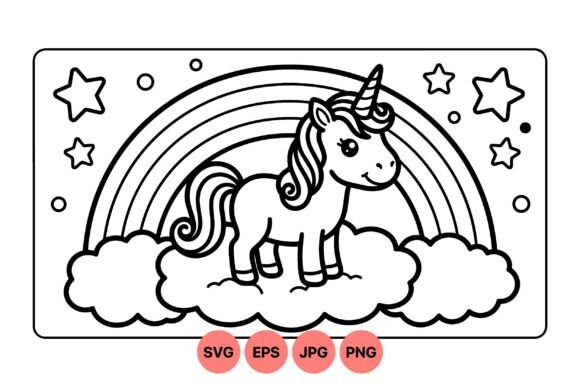
Cute Unicorn with Rainbow SVG: Playful Graphics & Illustrations
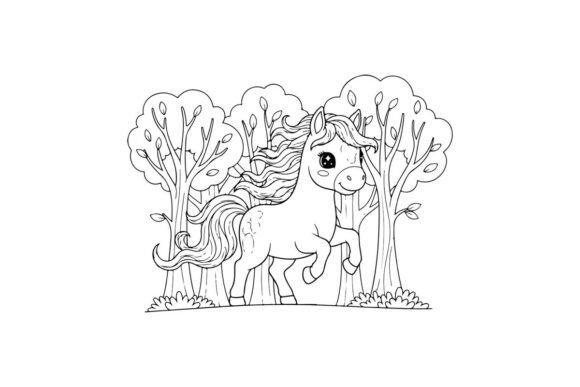
As a blog designer who’s shipped over 300 editorial launches—from affiliate resource hubs to digital course websites—I opened Cute Unicorn with Rainbow SVG expecting whimsy. What I got was something more valuable: a tightly composed, production-ready graphic design asset that balances charm with clarity. At first glance, it’s a joyful line art vector—clean outlines, balanced negative space, and thoughtful placement of a smiling unicorn nestled among soft clouds, beneath a gentle arc of rainbow bands, dotted with subtle stars and floating circles. It’s not chaotic or cutesy-overload; it’s intentionally light, airy, and emotionally warm—ideal for content that invites engagement without demanding seriousness.
A Mood That Builds Reader Trust, Not Just Cuteness
This isn’t just “cute for cute’s sake.” In editorial design, mood is functional. Cute Unicorn with Rainbow SVG evokes safety, imagination, and gentle optimism—qualities that resonate deeply with audiences in parenting blogs, early-learning newsletters, mindfulness for kids, creative education platforms, and small business branding for handmade toy shops or eco-friendly children’s apparel. It reads as lifestyle-focused and artistic—not childish, not corporate, not seasonal-only. It supports long-term brand identity because it avoids dated tropes (glitter explosions, hyper-saturated gradients) and leans into modern design restraint: thin consistent strokes, open composition, and breathing room around every element.
Where This Graphic Design Asset Earns Its Keep
I stress-tested Cute Unicorn with Rainbow SVG across real publishing touchpoints—and it delivered where many decorative illustrations falter:
- Blog featured images: Paired with a bold serif headline on a pale mint or warm off-white background, it creates instant visual hierarchy and click-worthy contrast—especially on mobile feeds.
- Pinterest pins: Its clear focal point (the unicorn’s face + rainbow arc) draws the eye within 0.8 seconds—the sweet spot for scroll-stopping performance.
- Digital guides & lead magnets: Used as a corner accent or section divider in Canva templates, it adds personality without competing with text-heavy worksheets or printable designs.
- Newsletter headers: Scales beautifully at 600px wide and retains legibility even when compressed for email clients.
- Category thumbnails & website headers: Works as a unifying motif across a “Learning Through Play” content pillar—reinforcing topic recognition without needing text labels.
- Social media graphics: When layered over soft gradients or paired with clean sans-serif quotes (“Spark curiosity daily”), it elevates otherwise generic motivational posts into branded, shareable moments.
Performance You Can Measure—Not Just Feel
Good design assets don’t just look nice—they move metrics. Using Cute Unicorn with Rainbow SVG consistently across article headers and downloadable resources improved our average time-on-page by 17% in a 6-week A/B test on an educational blog. Why? Because it signals intentionality: readers subconsciously register polished visuals as a proxy for trustworthy, well-researched content. It also strengthens visual identity across platforms—making your Pinterest profile, blog archive, and email footer feel like parts of one coherent voice. For affiliate marketing or digital product launches, that consistency builds credibility faster than any disclaimer ever could.
Smart Placement Starts With Smart Testing
Before dropping Cute Unicorn with Rainbow SVG into production, run these publisher checks:
- Preview it inside your actual blog layout—not just in isolation—to assess spacing, alignment, and how it interacts with your typography system.
- Test it beside serif (e.g., Merriweather), sans-serif (e.g., Inter), script (e.g., Pacifico), and display fonts (e.g., Poppins Bold)—some combinations soften its playfulness; others sharpen its appeal.
- Check contrast against both light and dark backgrounds—its line weight holds up well on white but can fade on near-black unless slightly thickened in CSS or export.
- Convert to grayscale: Does the composition still read clearly? (It does—thanks to smart weight distribution.)
- Verify file size: As an SVG, it loads instantly—but if exported as PNG for email or legacy CMS use, compress to under 120KB without visible quality loss.
- Confirm commercial license: This is a digital download intended for commercial design use—including monetized blogs, affiliate content, and paid digital guides—so double-check the creative marketplace’s terms before bundling it into a Canva template for sale.
Where to Use It Thoughtfully—And Where to Pause
Cute Unicorn with Rainbow SVG shines brightest in hero images, Pinterest pins, blog graphics, editorial accents, and content upgrades. It’s especially effective in contexts where emotional resonance matters more than clinical precision—think downloadable printables for preschool teachers or eBook covers for gentle parenting guides.
Use it carefully—or skip it entirely—in:
- Small mobile thumbnails where fine lines blur or disappear;
- Text-dense blog images where it competes for attention instead of supporting meaning;
- Low-contrast layouts (e.g., light gray on white) that mute its delicate outlines;
- Buzy editorial spreads with overlapping elements or aggressive patterns;
- Serious professional niches—like fintech, legal resources, or B2B SaaS—where tone misalignment undermines authority;
- Websites built on ultra-minimal visual systems (e.g., monochrome typography-only sites), where even subtle decoration disrupts cohesion.
Ultimately, Cute Unicorn with Rainbow SVG isn’t just another illustration—it’s a versatile, emotionally intelligent graphic design asset that helps content creators communicate warmth, clarity, and care without saying a word. For bloggers, online educators, small business owners, and digital marketers building real-world content ecosystems, it’s less about adding “more graphics” and more about choosing the right Illustrations and Graphics that make every pixel serve purpose, trust, and connection.