Cocktails and Drinks Line Art Svg: Graphics & Illustrations
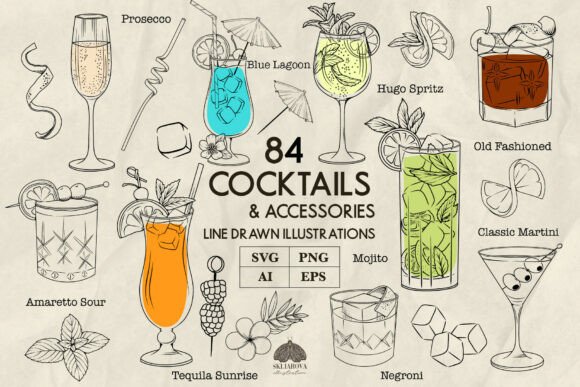
When a client walks into your studio asking for a summer cocktail menu that feels both elevated and playful, you immediately know the visuals need to do a lot of heavy lifting. They don’t want photography—they want something that whispers boutique, something that works on a textured paper menu, a window decal, and a set of enamel pins. That’s the exact moment I reached for Cocktails and Drinks Line Art Svg. This collection of 84 hand‑drawn illustrations isn’t just a bundle of graphics; it’s a carefully curated mood builder for anyone designing for food, drink, hospitality, or handmade markets.
The first impression is undeniably consistent. All 84 line‑art pieces share a unified, organic hand that sits comfortably between modern minimalism and vintage botanical illustration. The set includes not only finished cocktails and tall glasses, but also individual ingredients, garnishes, and bar tools—mint sprigs, citrus wheels, shakers, strainers, even a jigger. That breadth transforms the asset from a simple clipart pack into a flexible graphic design asset capable of building entire scenes rather than just isolated icons.
Visual Mood and Immediate Design Direction
Opening the folder, the first thing any designer will notice is the line weight. It’s intentionally delicate, reminiscent of fine‑liner pen work, which gives every illustration a refined, handmade feel without crossing into messy or overly sketchy territory. This matters because in client work, organic line art often falls into two traps: too rigid and it looks like stock vector; too loose and it looks unprofessional. Cocktails and Drinks Line Art Svg lands in that sweet spot where the imperfections feel intentional, making it a strong candidate for brand identity projects that want to signal artisanal quality.
For a recent project—a small‑batch bitters company launching a new line—this set immediately suggested a visual direction. The client wanted to avoid the heavy, dark aesthetics of traditional spirit branding and instead lean into bright, herbaceous, botanical energy. The ingredient illustrations (mint, rosemary, lemon peel) paired with the clean cocktail glasses gave us the flexibility to build label designs that felt both delicate and readable. No heavy re‑coloring was needed; the line art stayed crisp on a light kraft paper background, and the thin strokes printed beautifully on a matte label stock.
Where This Asset Performs Brilliantly in Live Projects
After testing this set across several mockups, it’s clear that Cocktails and Drinks Line Art Svg excels in specific design territories. The vector nature of the included AI and EPS files means you can scale these elements infinitely without losing quality—critical for large‑format work like wall murals, market stall banners, or oversized event posters. The SVG files, in particular, make it easy to integrate individual elements into Canva templates or web design projects, especially if you’re building a brand’s recipe page or an online drink menu.
Here’s a breakdown of the most successful applications I’ve tested:
- Product labels and packaging design: The fine lines register beautifully on textured paper, and the transparent PNG files slip effortlessly onto glass bottle mockups or craft beer can designs.
- Social media graphics: For Instagram posts, Pinterest pins, and story highlights, the consistent style creates a cohesive feed. I’ve used a single cocktail illustration as a subtle hero element behind semi‑transparent typography, and the result looked editorial and high‑end.
- Print‑on‑demand merchandise: T‑shirt designs, tote bags, and even enamel mugs work well because the line art reads clearly at a distance. The monoline style also translates beautifully to single‑color screen printing, keeping production costs low for small businesses.
- Cricut projects and stickers: The SVG files cut cleanly without hours of node clean‑up. I’ve tested a few drink illustrations on vinyl and layered paper, and the results were crisp enough for a premium sticker shop or a handmade event signage.
- Editorial design and menu printing: Whether it’s a digital magazine spread or a printed cocktail menu, these illustrations add a sense of craft without overwhelming the layout. They work especially well as decorative accents that frame text rather than compete with it.
The Deeper Creative Value for Small Business Branding
What separates a useful creative design asset from a forgettable one is how well it supports long‑term brand consistency. With 84 items, Cocktails and Drinks Line Art Svg gives a small business owner enough variety to build a recognizable visual language without needing to hire an illustrator for every new campaign. A handmade candle company, for instance, could use the rosemary sprig and the cocktail shaker across their entire product line—from jar labels to thank‑you cards—while saving the full drink illustrations for seasonal launches. The repetition of the same hand‑drawn style builds visual trust and recognition far faster than mixing stock vectors from different sources.
For designers working with Etsy product creators or digital sellers, this bundle is also a strong foundation for printable design products. I’ve seen colleagues use subsets of these illustrations to create printable wall art sets, bar cart checklists, and even recipe card templates that sell well in creative marketplaces. Because the line art remains neutral in tone, buyers can easily recolor it to match their own brand palette, making it a versatile commercial design resource.
Working with the Files: What Designers Need to Know
Before slotting this asset into a paid client project, I always run a technical check. The download includes AI, EPS, SVG, and PNG formats. I opened the AI file first—everything is well‑layered, with each element grouped and labeled, which is a huge time‑saver when you need to isolate a single mint leaf or change the stroke weight across an entire cocktail. The EPS file behaved identically, and I had no trouble importing it into older software versions. The SVG files are clean and ready for direct use in design apps, though I always recommend double‑checking node counts if you plan to heavily customize in a vector editor.
One important note: the PNG files have transparent backgrounds, but they are raster versions of the vector originals. For large‑scale printing, always rely on the AI or EPS files to avoid any pixelation. The transparent PNGs are, however, perfect for quick digital mockups, product mockup overlays, and layering in Canva where users might not be comfortable editing vectors.
Testing Across Backgrounds and Print
I printed a selection of drinks and ingredients on both bright white and uncoated cream stock. The line art held its crispness beautifully, and the fine details—like the bubbles in a champagne flute or the texture on a citrus peel—didn’t fill in or blur. On a dark background, the thin lines risked becoming too subtle, so I recommend thickening the stroke slightly if you’re reversing the artwork out of a navy or charcoal surface. On mid‑tone backgrounds, the contrast remained strong, and a simple color change to a warm gold or soft copper made the illustrations feel instantly premium.
Where a Designer Should Proceed with Caution
No asset is universally perfect, and Cocktails and Drinks Line Art Svg has specific limitations that deserve honest acknowledgment. The delicate line weight, while beautiful, can become a liability in very small sizes. I tested a few elements at under half an inch, and the finer details started to disappear, especially on textured or low‑resolution screens. For tiny icons on a mobile navigation bar or a very compact business card, you’ll likely need to select only the boldest silhouettes and skip the more intricate ingredient drawings.
Similarly, extremely crowded layouts can overwhelm the line art. If you’re placing multiple illustrations behind heavy typography or photographic backgrounds, the fine strokes can get lost and create visual noise. In these cases, I treat the asset as a decorative accent rather than a focal point, using it sparingly to frame a message instead of filling every corner.
For minimalist branding or strict corporate projects, the hand‑drawn quality might feel too casual. A law firm or a financial services company would likely reject this style, but a boutique distillery, a wedding invitation designer, a lifestyle blogger, or a handmade business will find it perfectly aligned with their audience’s expectations. Always match the asset’s personality to the client’s tone before you commit.
Pairing with Typography and Layout
One of the smartest tests I run is placing the artwork next to different font categories. Cocktails and Drinks Line Art Svg pairs beautifully with clean sans serif fonts—the contrast between the organic lines and geometric letterforms creates a balanced, modern composition. A light script or handwritten font can also work if the project calls for a more romantic, invitation‑style feel, but be careful: two hand‑drawn elements can start to compete. I typically keep the typography simple and let the illustrations do the heavy lifting in terms of personality.
In a recent marketing visuals series for a rooftop bar, I used the cocktail illustrations as oversized hero graphics behind a bold, condensed sans serif headline. The result felt editorial and aspirational, exactly the kind of image that stops the scroll on Instagram. The key was giving the line art room to breathe—plenty of negative space, a single focal drink, and a restrained color palette of black, warm beige, and a single accent hue.
Commercial Viability and Licensing
Before dropping this set into a client’s final deliverables, check the included commercial license. Most reputable bundles allow use in physical products for sale, digital designs, and branding, but restrictions on reselling the individual graphics as‑is or on print‑on‑demand platforms can vary. I always confirm whether I can use the elements in a logo design, on merchandise, and in templates sold to third parties. For this particular set, the license terms were flexible enough for my typical client work, but I still document the usage rights for each project to protect both myself and the business I’m designing for.
How This Asset Elevates Audience Engagement
From a psychological standpoint, hand‑drawn line art performs remarkably well in social media graphics and editorial design because it feels human and approachable. In a sea of polished photography and overly structured templates, the slight irregularity of these illustrations invites the viewer to pause. For a blogger or content creator trying to build a loyal following, that kind of visual warmth can increase shares and save time. Instead of commissioning a custom illustration for every post, they can pull from this 84‑piece toolkit and assemble something that still feels bespoke.
For print‑on‑demand sellers, the smooth lines of the cocktail glasses and ingredients translate well to physical products where texture matters. A tote bag with a single gin and tonic illustration, centered and blown up large, has a chic, gallery‑wall quality that customers are willing to pay a premium for. The same goes for sticker design—the transparent PNG backgrounds make it easy to create die‑cut sticker sheets that feel like a collection rather than a random assortment.
Final Practical Designer Notes
If you’re considering Cocktails and Drinks Line Art Svg for an upcoming creative design project, here’s a quick checklist that I follow before signing off on any asset:
- Test in black and white first: Remove all color and see if the illustration still holds its shape and communicates the idea. These line art pieces pass that test easily.
- Check contrast on light and dark mockups: Adjust stroke weight if you’re placing the art on a dark background, or consider using a lighter outline color.
- Preview at small and large sizes: Zoom in to 100% and out to thumbnail size to ensure readability. The intricate ingredients are best kept at least an inch tall.
- Place on real product mockups: A label mockup with texture and curved surfaces reveals any visual weaknesses that a flat screen might hide.
- Inspect file formats and editability: Use the AI or EPS files for custom modifications, and reserve the SVGs for quick web‑ready placements.
- Pair with the right font: A clean serif or sans serif almost always wins; save the script fonts for accent words only.
- Confirm commercial licensing: Always read the license details, especially if you plan to use the illustrations in logo design or resell templates.
In the end, the true value of a design bundle like this isn’t just the number of files—it’s the creative head start it provides. For a designer juggling multiple client deadlines, having a cohesive library of 84 hand‑drawn cocktail and ingredient illustrations means you can spend more time on concept and composition, less time hunting for the right visual. Whether you’re building a brand identity for a craft cocktail bar, designing a seasonal menu for a café, or creating a new line of printable art for an Etsy shop, Cocktails and Drinks Line Art Svg delivers a polished, versatile, and genuinely charming set of graphics that feel far more thoughtful than the average stock pack.